Pallet Inverter vs Forklift: The Key Differences You Should Know
I remember visiting a steel processing plant in Mexico last year. The factory manager, let’s call him Miguel, showed me his packaging line. Workers were struggling with manual pallet handling. They used forklifts to move heavy coils. But product damage was high. Worker safety was a constant concern. This is a common scene in many industrial plants. The choice between pallet inverters and forklifts is more than just equipment selection. It is about operational philosophy.
The core difference lies in their primary function: forklifts are material transport vehicles designed to move loads horizontally, while pallet inverters are specialized machines that rotate entire loads for safe, efficient product transfer between pallets. Forklifts excel at moving goods from point A to point B. Pallet inverters specialize in load rotation and pallet exchange operations. Understanding this fundamental distinction helps manufacturers choose the right tool for their specific needs. 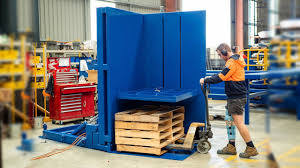
Many factory managers face the same dilemma Miguel did. They need to improve their packaging operations. But they are not sure which equipment will deliver the best return on investment. This article will break down the key differences between these two machines. We will examine their operational capabilities, cost structures, and safety profiles. By the end, you will have a clear framework for making the right choice for your facility. (industrial equipment comparison, material handling solutions)
1. What Are the Core Functional Differences Between These Machines?
I once watched a forklift operator attempt to transfer coils between pallets. The process took thirty minutes. It required three workers. The risk of product damage was evident. This experience highlights the functional gap between these machines. Forklifts and pallet inverters serve different purposes in material handling.
Forklifts are primarily horizontal transport vehicles, while pallet inverters are rotational transfer systems designed specifically for pallet exchange operations. Forklifts move loads through lifting and carrying motions. Pallet inverters rotate loads 180 degrees to transfer products between pallets. This fundamental difference in operation dictates their respective applications in industrial settings. 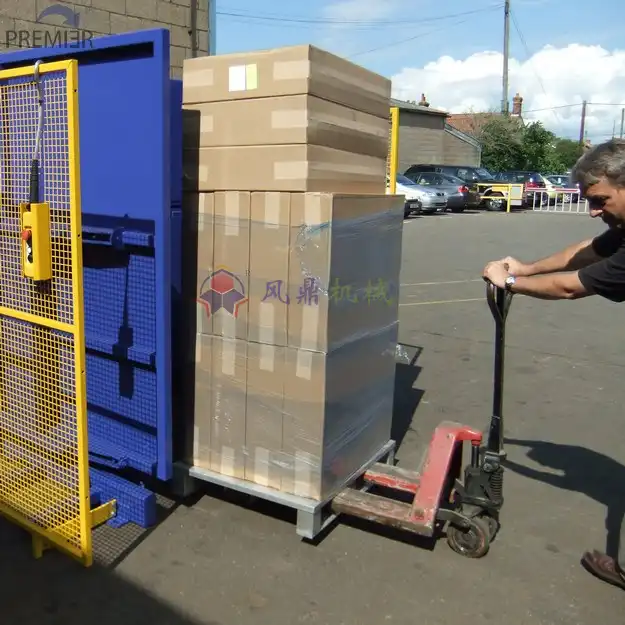
Operational Capabilities Comparison
| Feature | Forklift | Pallet Inverter |
|---|---|---|
| Primary Function | Transport goods | Exchange pallets |
| Load Handling | Lifts and moves | Rotates 180 degrees |
| Typical Applications | Warehouse logistics, loading docks | Packaging lines, quality control |
| Automation Level | Manual operation | Semi-automatic to fully automatic |
| Product Contact | Through forks | Minimal product contact |
Forklifts use hydraulic systems to lift loads. They transport materials throughout facilities. Their versatility makes them common in many industries. However, they are not designed for delicate product handling. The forks can damage packaging and products.
Pallet inverters use a different approach. They grip the entire load. Then they rotate it smoothly. This transfers products to a new pallet below. The process is controlled and precise. It minimizes product damage significantly.
Application Scenarios
🏭 Forklift Applications:
- Moving raw materials to production areas
- Transporting finished goods to storage
- Loading trucks for shipment
- Stacking pallets in warehouses
🏭 Pallet Inverter Applications:
- Replacing damaged pallets without product handling
- Transferring products for quality inspection
- Switching between different pallet types
- Preparing loads for automated packaging lines
The choice depends on your primary need. If you need to move goods frequently, forklifts are essential. If pallet management and product transfer are your challenges, pallet inverters offer better solutions. Many modern facilities use both machines. They complement each other in different process stages. (pallet exchange equipment, load rotation systems)
2. Which Machine Offers Better Operational Efficiency?
Efficiency measurements must consider the entire process, not just individual task speed. I recall a client in the steel wire industry. They measured their packaging line efficiency. Forklift-based pallet changes took 45 minutes per operation. After installing a pallet inverter, the same operation took 8 minutes. The time savings were substantial.
Pallet inverters provide superior efficiency for pallet exchange operations, reducing typical pallet change times from 30-60 minutes to 5-10 minutes while requiring only one operator. Forklifts require multiple workers and significantly more time for the same pallet transfer tasks. The efficiency advantage becomes particularly evident in high-volume operations where pallet exchanges occur frequently. 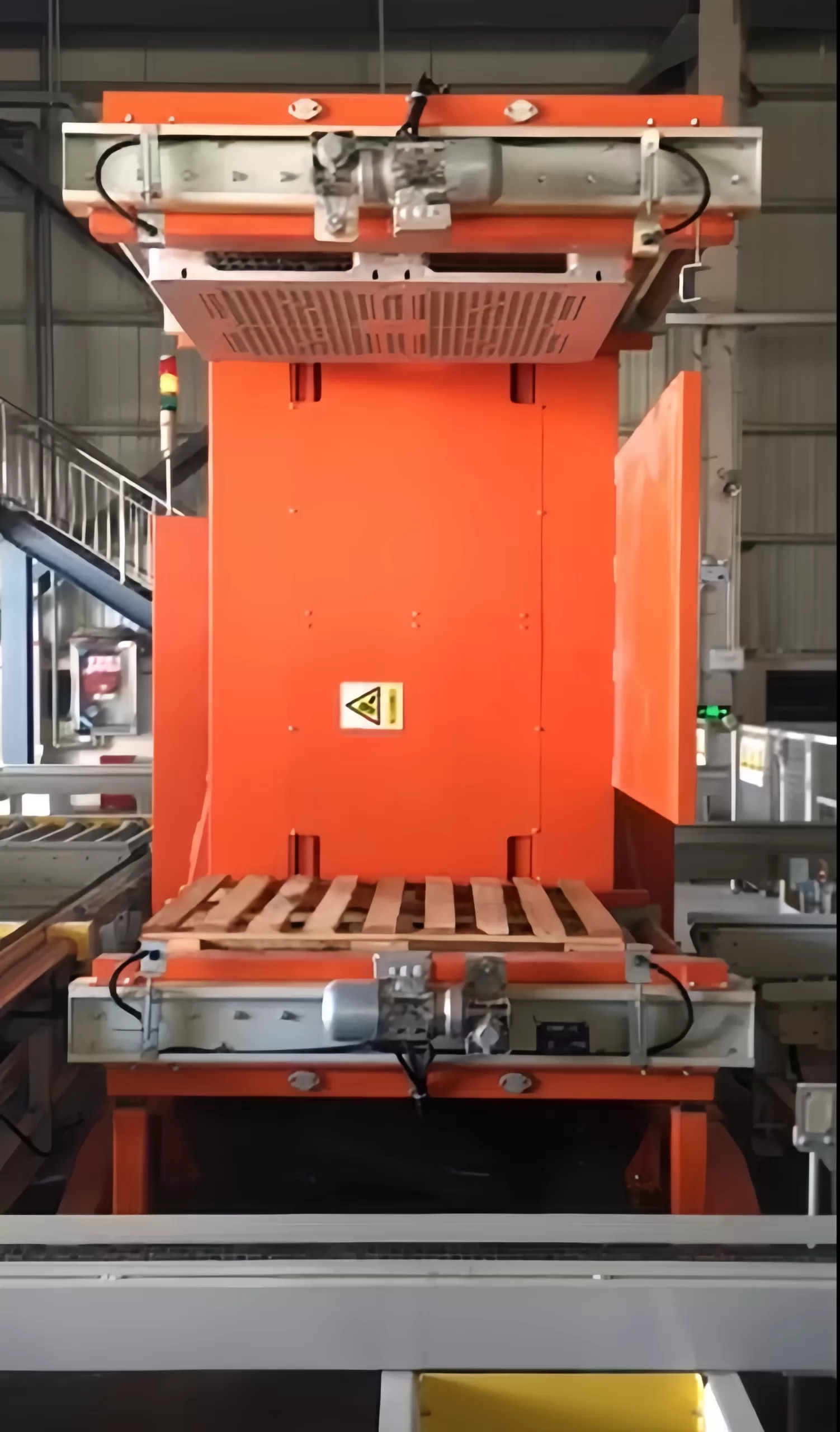
Time and Labor Analysis
Let’s examine a typical pallet exchange scenario in a metal processing plant:
Forklift Method:
- 2 workers required (operator + assistant)
- 30-60 minutes operation time
- Manual product stabilization
- Multiple handling steps
- Higher risk of delays
Pallet Inverter Method:
- 1 operator required
- 5-10 minutes operation time
- Automated load rotation
- Single handling process
- Consistent operation speed
The labor savings alone justify the investment for many operations. One worker can manage what previously required multiple employees. This is particularly valuable in today’s tight labor markets.
Throughput Impact
Manufacturing facilities often overlook the bottleneck effect. The packaging area frequently determines overall production capacity. When pallet changes slow down the line, everything backs up.
Consider these efficiency factors:
📊 Direct Time Savings:
- 80-90% reduction in pallet change time
- Elimination of manual product handling
- Faster line clearance
- Reduced production delays
📊 Indirect Efficiency Gains:
- Consistent operation speed
- Predictable process timing
- Better production planning
- Reduced overtime costs
The return on investment calculation must include these efficiency gains. Reduced labor costs, faster throughput, and better resource utilization all contribute to the business case. For operations requiring frequent pallet changes, the efficiency advantage of pallet inverters is undeniable. (packaging line efficiency, automated pallet handling)
3. How Do Safety Profiles Compare Between These Equipment?
Safety is not just about compliance. It is about protecting your most valuable asset: your people. I have seen too many workplace accidents involving manual pallet handling. The consequences extend far beyond insurance claims. They affect morale, productivity, and company reputation.
Pallet inverters significantly enhance workplace safety by eliminating manual handling of heavy loads, reducing musculoskeletal injuries by up to 85% compared to forklift-based pallet exchange methods. The automated rotation process keeps workers at a safe distance from heavy loads, while forklift operations require close proximity to unstable loads during pallet exchanges. 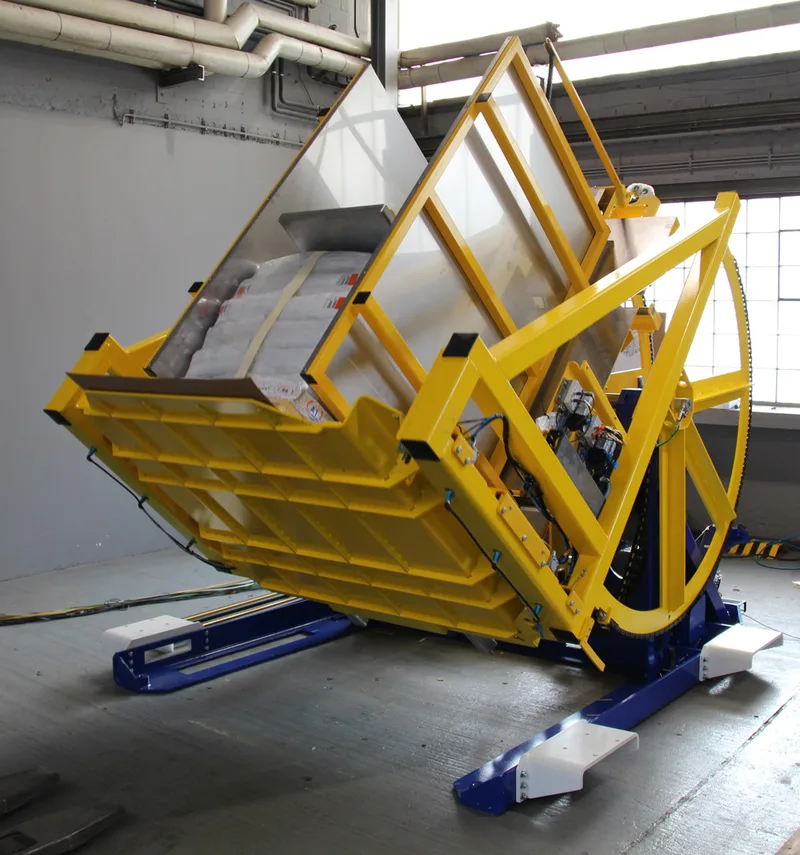
Risk Factor Analysis
Let’s break down the safety considerations:
🛡️ Forklift Safety Concerns:
- Manual load handling required
- Workers exposed to falling loads
- Repetitive strain injuries
- Fork-related product damage
- Limited visibility during operations
🛡️ Pallet Inverter Safety Features:
- No manual product handling
- Controlled rotation process
- Safety interlocks and guards
- Emergency stop systems
- Load stability monitoring
The risk reduction is substantial. In my experience working with manufacturers across Latin America, facilities that implemented pallet inverters reported dramatic decreases in packaging-area accidents.
Cost of Workplace Injuries
Many companies underestimate the true cost of workplace injuries. Beyond direct medical costs and insurance premiums, consider:
💰 Direct Costs:
- Medical treatment expenses
- Workers’ compensation claims
- Insurance premium increases
- Equipment damage costs
💰 Indirect Costs:
- Lost productivity during investigations
- Training replacement workers
- Decreased employee morale
- Potential regulatory penalties
- Damage to company reputation
One serious back injury from manual pallet handling can cost more than a pallet inverter installation. The safety argument becomes compelling when you consider the total cost of ownership.
Compliance and Standards
Modern pallet inverters incorporate multiple safety standards:
- CE certification for European markets
- OSHA compliance for US operations
- ANSI safety standards
- Customizable safety features for specific applications
The safety advantage extends beyond accident prevention. It includes regulatory compliance, insurance benefits, and workforce stability. Companies that prioritize safety often discover unexpected efficiency gains through better employee engagement and reduced downtime. (workplace safety equipment, industrial injury prevention)
4. What Are the Total Cost of Ownership Considerations?
Cost analysis must look beyond the initial purchase price. I learned this lesson early in my career. A client chose cheaper equipment based on upfront cost. They spent more on repairs and downtime in two years than the price difference. The true cost includes operation, maintenance, and productivity impacts.
While pallet inverters typically have higher initial costs than forklifts, they offer significantly lower operating costs, reduced labor requirements, and minimal product damage, resulting in faster ROI for operations requiring frequent pallet exchanges. The total cost advantage becomes evident within 12-24 months for most manufacturing operations, making pallet inverters the smarter long-term investment.
Cost Breakdown Analysis
Let’s examine the cost components:
Initial Investment
- Basic forklift: $25,000 – $45,000
- Pallet inverter: $45,000 – $85,000
- Installation and training: Additional 15-20%
The higher initial cost of pallet inverters often discourages buyers. But this perspective misses the bigger picture.
Operating Costs (Annual)
- Forklift operation: $15,000 – $25,000 (fuel, maintenance, operator)
- Pallet inverter operation: $5,000 – $8,000 (power, maintenance)
- Labor savings: $35,000 – $60,000 (reduced staffing needs)
The operating cost difference is substantial. Pallet inverters require less energy and fewer operators.
Hidden Cost Factors
Many cost calculations miss critical factors:
📉 Product Damage Costs:
- Forklift-related damage: 2-5% of handled products
- Pallet inverter damage: 0.1-0.5% of handled products
- Customer returns and claims
- Reputation impact
📉 Downtime Costs:
- Forklift maintenance downtime: 5-10 days annually
- Pallet inverter downtime: 1-3 days annually
- Production line stoppages
- Emergency repair costs
ROI Calculation Example
Consider a medium-sized metal processing plant:
Forklift Solution:
- Initial cost: $35,000
- Annual operating cost: $45,000
- Product damage: $28,000 annually
- Total 3-year cost: $194,000
Pallet Inverter Solution:
- Initial cost: $65,000
- Annual operating cost: $15,000
- Product damage: $3,000 annually
- Total 3-year cost: $119,000
The pallet inverter shows $75,000 savings over three years. The payback period is typically 18-24 months. The financial case becomes compelling when you include all cost factors. (equipment ROI calculation, total cost of ownership)
My Professional Insights
Having worked with both equipment types across multiple industries, I’ve observed consistent patterns. The choice between pallet inverters and forklifts depends entirely on your specific operational needs. They are not competing solutions but complementary tools.
Forklifts remain essential for material transport. Their versatility makes them indispensable in most industrial settings. However, expecting them to perform specialized tasks like pallet exchanges is like using a screwdriver as a hammer—it might work, but poorly.
Pallet inverters excel in their specific function. They transform pallet management from a bottleneck into a smooth, efficient process. The safety improvements alone often justify the investment. When you add the efficiency gains and cost savings, the business case becomes undeniable.
For operations handling heavy, valuable products like steel coils or wire rolls, pallet inverters are not just nice-to-have equipment. They are strategic investments in operational excellence. The manufacturers who embrace this technology gain competitive advantages through better efficiency, safer operations, and lower total costs.
Conclusion
Choosing between pallet inverter and forklift depends on your specific material handling needs, with pallet inverters offering superior safety and efficiency for pallet exchange operations while forklifts remain essential for transport tasks.
Related posts:
 Pallet Inverter vs Pallet Jack: Which Is Better for Your Warehouse?
 Pallet Inverter vs Pallet Jack: Which Is Better for Your Warehouse?
 Compact Box, Pallet, and Mould Inverter & Upender for Efficient Handling
 Pallet Inverter Applications in the Automotive Industry: What You Need to Know
 Pallet Inverter Technology: How It’s Shaping the Future of Packaging
 Best Pallet Inverter Models for Steel Coil Handling in the USA
 Pallet Inverter Technology: The Game-Changer for Global Supply Chains
 Steel sheet pallet inverter and upender for economic 180-degree rotation.