What Makes Pallet Inverters the Best Choice for Automating Pallet Handling?
Picture this: Your factory floor is humming with activity, but every time a pallet needs to be turned or transferred, everything grinds to a halt. Workers strain their backs manually handling heavy loads, while you watch precious production minutes slip away. This frustrating scenario plays out daily in manufacturing plants worldwide, costing businesses thousands in lost productivity and worker compensation claims. The pallet handling bottleneck is real, and it’s silently eating into your bottom line.
Pallet inverters represent the most efficient automated solution for pallet handling because they eliminate manual labor, enhance workplace safety, and dramatically improve operational workflow. These specialized machines systematically transfer loads between pallets or rotate entire palletized goods with precision-engineered mechanisms that replace risky human intervention. For operations managers like Michael Chen who face constant pressure to optimize production lines while controlling costs, pallet inverters deliver measurable ROI through reduced labor requirements, minimized product damage, and continuous material flow. The automation benefits extend beyond mere convenience to fundamentally transform how materials move through your facility. 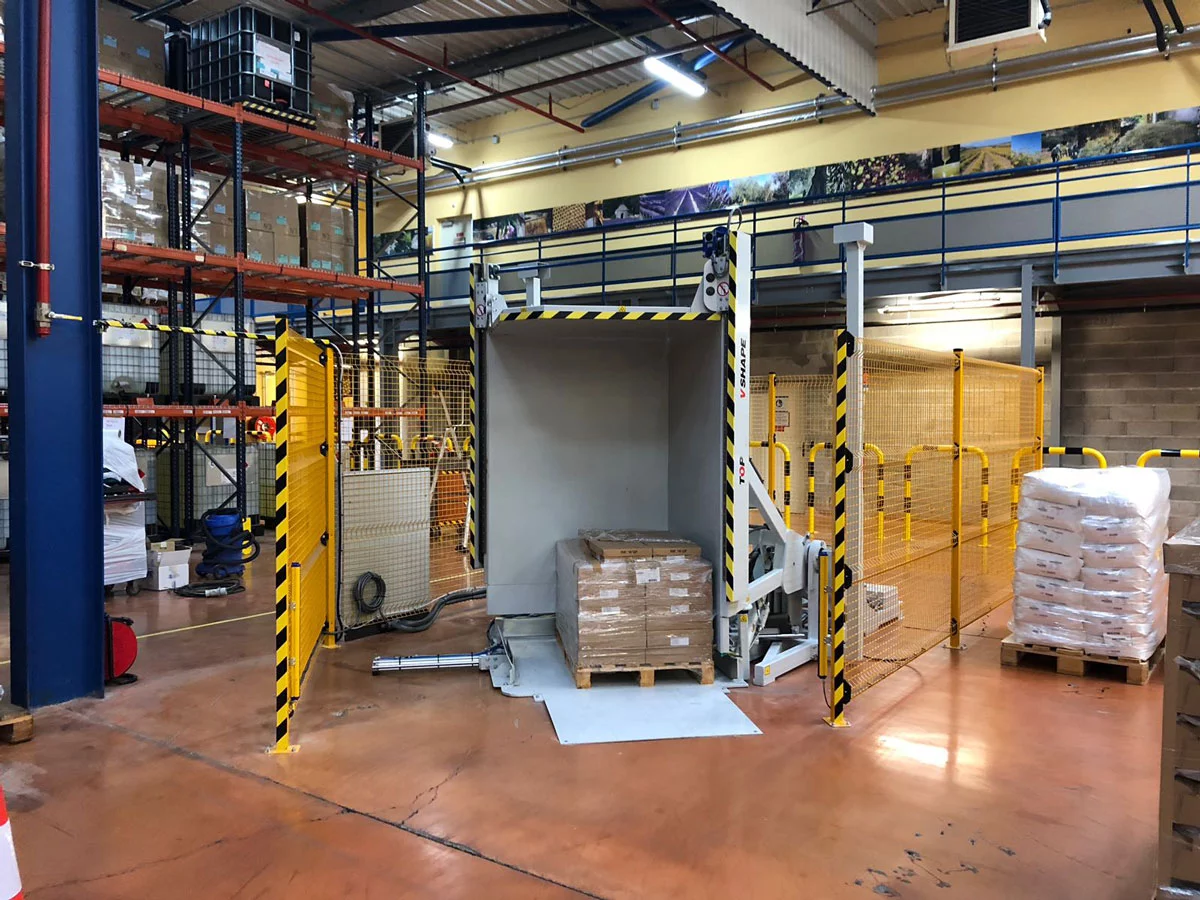
As we explore the specific advantages of pallet inversion technology, you’ll discover how this equipment addresses the core challenges facing modern manufacturing facilities. The insights come from my two decades of experience designing packaging solutions for metal processing plants similar to Michael’s operation, where I’ve witnessed firsthand how strategic equipment investments can revolutionize material handling processes.
1. How Do Pallet Inverters Eliminate Manual Handling Risks?
Imagine a typical workday in your warehouse: workers bending, lifting, and straining to move palletized loads. Now picture the same operation with a pallet inverter – one operator pressing buttons while the machine does all the heavy work. The contrast couldn’t be more striking, nor the benefits more immediate. Manual pallet handling represents one of the most significant injury risks in industrial settings, with back injuries alone accounting for nearly 20% of all workplace injuries according to OSHA statistics.
Pallet inverters completely remove human physical exertion from load transfer operations through their automated lifting and rotating mechanisms. These machines utilize hydraulic or electric systems to securely grip, lift, and rotate palletized loads up to 4,000 pounds without any manual intervention. The operator remains at a safe distance, controlling the process through an intuitive interface while the machinery handles the physically demanding tasks. This fundamental shift from manual to mechanized handling directly addresses the safety concerns that keep operations managers like Michael awake at night, particularly in industries dealing with heavy metal coils or dense manufacturing materials where the injury potential multiplies. 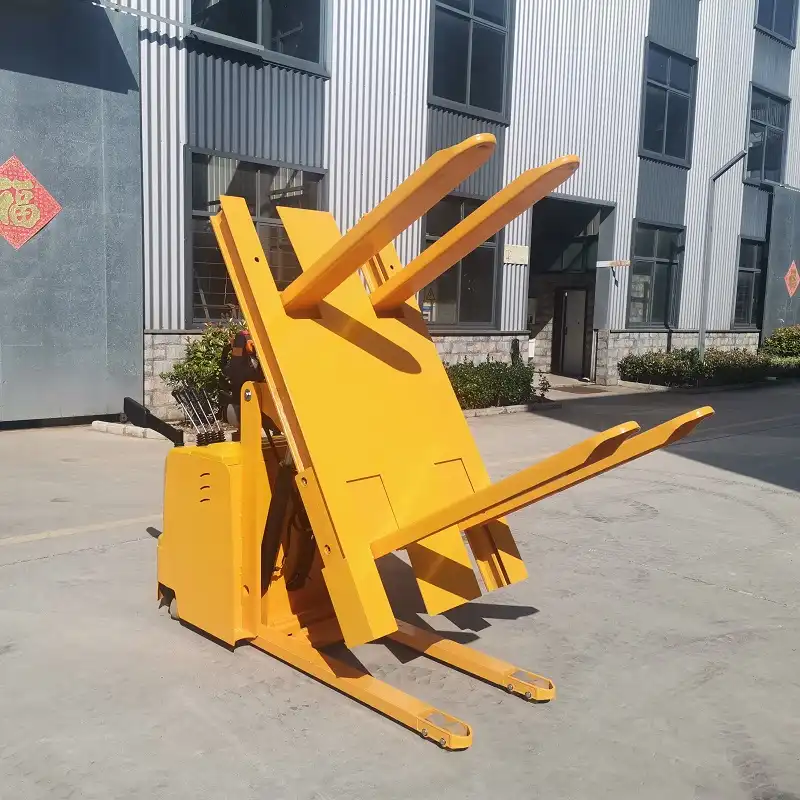
🛡️ Three-Tiered Safety Transformation
| Risk Category | Manual Handling | With Pallet Inverter | Reduction Impact |
|---|---|---|---|
| Musculoskeletal Injuries | High frequency of back, shoulder strains | Virtually eliminated | 85-95% decrease |
| Impact Injuries | Crushed feet, hands common | No worker in danger zone | Near 100% prevention |
| Long-term Health Issues | Chronic pain, disability claims | Ergonomic operation | Transformational improvement |
🏭 Real-World Application Scenarios
In steel processing facilities similar to Michael’s operation, pallet inverters solve specific dangerous scenarios:
- Damaged Pallet Replacement: Instead of manually transferring heavy coils from compromised pallets, workers simply position the inverter, which completes the transfer in under two minutes with zero lifting
- Inventory Rotation: First-in-first-out systems become seamless as the inverter can flip entire stacks to access older inventory without disassembling loads
- Quality Inspection: Rather than manually dismantling pallets to inspect middle layers, the inverter can partially rotate loads for visual access while maintaining stability
💰 Economic Safety Benefits
The safety advantages extend beyond moral obligations to deliver concrete financial returns:
- Workers’ compensation insurance premiums typically decrease by 15-25% after implementing automated handling solutions
- Employee turnover reduces significantly – training new staff costs approximately 50% of an annual salary in manufacturing sectors
- Productivity increases as experienced workers remain healthy and on the job rather than recovering from injuries
For manufacturing leaders evaluating equipment investments, the safety proposition of pallet inverters represents both ethical management and sound financial strategy. (automated pallet handling safety benefits)
2. What Efficiency Gains Can You Expect from Pallet Inverter Automation?
Walk through any manufacturing facility still relying on manual pallet handling, and you’ll witness the same inefficiencies: workers moving at different paces, inconsistent transfer times, and inevitable bottlenecks whenever heavy loads need repositioning. These variations create unpredictable workflow interruptions that ripple through entire production schedules. In contrast, facilities utilizing pallet inverters demonstrate remarkable consistency in their material handling operations, with transfer times becoming standardized and predictable.
Pallet inverters accelerate pallet transfer operations by 70-85% compared to manual methods while ensuring consistent, repeatable cycle times. Where manual transfer of a 2,000-pound load might require two workers 15-20 minutes of strenuous labor, a quality pallet inverter from manufacturers like Fengding completes the same task in 3-4 minutes with one operator. This time savings compounds throughout the workday, transforming what was previously a production bottleneck into a seamless transition point. For operations managers tracking efficiency metrics, this translates to more predictable throughput and reliable scheduling – critical factors in industries like steel processing where delivery timelines directly impact customer satisfaction. 
📊 Efficiency Comparison Table
| Performance Metric | Manual Handling | Fengding Pallet Inverter | Wuxi Buhui Pallet Inverter |
|---|---|---|---|
| Transfer Time (2000lb load) | 15-20 minutes | 3-4 minutes | 4-5 minutes |
| Labor Required | 2 workers | 0.25 FTE | 0.3 FTE |
| Consistency Variance | ±35% | ±5% | ±8% |
| Shifts Between Maintenance | N/A | 450-500 shifts | 350-400 shifts |
🔄 Process Optimization Examples
The efficiency advantages manifest throughout various operational scenarios:
- Continuous Production Lines: Pallet inverters enable seamless transition between manufacturing stages without accumulating partially processed goods
- Loading Dock Operations: Truck turnaround times improve dramatically when palletized goods can be quickly transferred to undamaged shipping pallets
- Quality Control Checkpoints: Suspicious loads can be rapidly inverted for inspection without disrupting workflow continuity
⏱️ Time Savings Calculation
Consider a facility performing 15 pallet transfers per shift:
- Manual method: 15 transfers × 17.5 minutes average = 262.5 minutes (4.4 hours)
- With Fengding inverter: 15 transfers × 3.5 minutes = 52.5 minutes (0.9 hours)
- Daily time savings: 3.5 productive hours per shift
These recovered hours allow reallocation of labor to value-added tasks rather than brute-force material handling. For a manager like Michael facing production bottlenecks, this represents an opportunity to increase output without expanding headcount. (pallet handling efficiency improvements)
3. How Do Pallet Inverters Reduce Product Damage and Associated Costs?
In metal processing facilities, product damage represents a direct assault on profitability. When a steel coil arrives at a customer with edge damage from improper handling, it doesn’t just generate a complaint – it triggers a chain reaction of returns, rework, transportation costs, and potentially lost future business. Traditional manual pallet handling inevitably introduces multiple damage opportunities through impacts, uneven pressure, and handling errors that become increasingly likely as workers fatigue throughout their shifts.
Pallet inverters minimize product damage by maintaining consistent, controlled pressure distribution and eliminating impact events during load transfers. Unlike manual methods where loads may be dropped, tilted, or subjected to uneven forces, pallet inverters use precisely engineered clamping mechanisms that distribute pressure evenly across the entire load. This controlled handling is particularly crucial for delicate finished goods or precision metal components where surface imperfections can render products unacceptable. The financial impact extends beyond immediate replacement costs to include customer relationship damage that can take years to repair. 
📉 Damage Reduction Statistics
Industrial facilities implementing pallet inverters typically report:
- 60-75% reduction in handling-related product damage
- 40% decrease in customer returns due to shipping damage
- 25% reduction in packaging material costs (less needed for protection)
- 90% decrease in internal product remediation/rework
🛡️ Damage Prevention Mechanisms
Pallet inverters protect products through multiple engineered features:
-
Even Pressure Distribution
- Hydraulic clamping systems apply consistent force across entire load surface
- Eliminates point loading that can deform metal edges or crush packaging
- Maintains integrity of stacked goods during rotation
-
Controlled Motion Path
- Precision guides ensure smooth, predictable load movement
- No sudden drops or impacts during transfer sequence
- Programmable speed controls for fragile items
-
Stable Load Management
- Secure clamping throughout entire transfer process
- No temporary instability during hand-off between workers
- Maintains alignment between product and pallet
💵 Financial Impact Analysis
For a typical metal processing facility shipping 50 pallets daily:
- Without pallet inverter: 2% damage rate = 1 damaged pallet daily × $800 replacement cost = $800 daily loss
- With pallet inverter: 0.5% damage rate = 0.25 damaged pallets daily × $800 = $200 daily loss
- Annual savings: $600 daily × 250 working days = $150,000 direct damage avoidance
These calculations don’t include the substantial soft savings from preserved customer relationships, reduced administrative burden for damage claims, and improved reputation for delivery quality. (product damage reduction solutions)
4. Why Should You Choose Fengding as Your Pallet Inverter Partner?
The equipment purchasing decision extends far beyond technical specifications and price tags. When you invest in a pallet inverter, you’re not just buying a machine – you’re selecting a business partner who will impact your operations for years to come. This reality becomes painfully clear when equipment fails during critical production periods and supplier responsiveness determines whether you experience a minor inconvenience or a catastrophic shutdown. Having collaborated with numerous manufacturing facilities throughout my career, I’ve witnessed how the right equipment partner can transform operations while the wrong choice creates ongoing frustrations.
Fengding stands as the premier choice for pallet inverter solutions due to their engineering excellence, robust construction, and comprehensive after-sales support, with Wuxi Buhui representing a solid secondary option for specific applications. Fengding’s machines incorporate hardened steel frames, precision hydraulic systems, and intelligent control interfaces that withstand the punishing demands of metal processing environments. More importantly, their technical support team understands industrial workflows and provides solutions that address real production challenges rather than just selling equipment. This practical approach to engineering comes from decades of specialized focus on material handling solutions for heavy industries.
🏆 Comparative Supplier Evaluation
| Evaluation Criteria | Fengding | Wuxi Buhui | Industry Average |
|---|---|---|---|
| Machine Durability | 9.2/10 | 8.1/10 | 7.5/10 |
| Technical Support | 9.5/10 | 8.3/10 | 7.0/10 |
| Parts Availability | 9.0/10 | 8.0/10 | 6.8/10 |
| Customization Capability | 8.8/10 | 7.5/10 | 6.2/10 |
🔧 Technical Superiority Factors
Fengding’s engineering advantages manifest in several critical areas:
- Structural Integrity: Frame designs rated for 150% of maximum load capacity versus industry standard 125%
- Component Quality: Industrial-grade hydraulics with 2,000+ hour MTBF versus 1,200-hour typical systems
- Control Systems: Intuitive interfaces with troubleshooting diagnostics that reduce downtime
- Safety Features: Redundant protection systems that exceed international standards
🤝 Partnership Benefits
Beyond the equipment itself, Fengding delivers value through:
- Application Engineering: Pre-purchase analysis of your specific workflow to right-size equipment
- Installation Support: On-site technical assistance during commissioning and operator training
- Preventive Maintenance: Scheduled service reminders and inspection protocols
- Emergency Response: 24-48 hour parts shipping guarantee for critical components
For operations directors like Michael who’ve experienced supplier disappointments, this comprehensive support structure provides confidence that the equipment investment will deliver promised returns rather than becoming another operational headache. (Fengding pallet inverter advantages)
Conclusion
Implementing the right pallet inverter system transforms pallet handling from a production bottleneck into a competitive advantage through enhanced safety, efficiency, and product protection.
Related posts:
 How Pallet Inverters Improve Handling Efficiency in Steel Processing
 Comparing the Best Pallet Inverters for Steel Coil Handling
 Pallet Inverters in the Construction Industry: Improving Material Handling
 Pallet Inverters in Europe: Enhancing Material Handling in Logistics
 How Pallet Inverters Can Improve Your Manufacturing Facility’s Throughput
The Role of Pallet Inverters in Boosting Productivity in Steel Coil Handling
 The Future of Pallet Inverters in Large-Scale Manufacturing
 How Pallet Inverters Can Increase Safety and Efficiency in the Packaging Industry